
It Took Me a Decade to Say “I’m Not Ashamed” and Mean It
By Faida Niyo
September 18, 2026
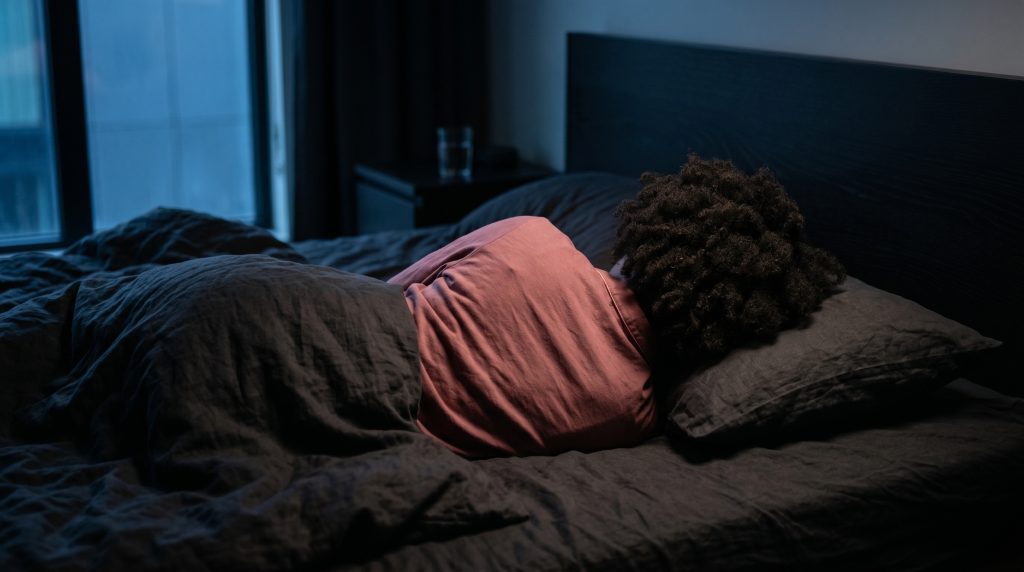
For most of my thirties, I slept on one half of the bed, even when there was no one else in it. I kept my whole body folded into that narrow strip against the wall, night after night, like I hadn’t earned the right to take up the rest of the space. I did that for ten years, before I understood I was training myself not to be touched.
 Long before I knew I was positive, I started flinching from touch. I spent my early twenties on the streets, doing what kept me fed, and by the time I was 25, my body had learned that hands rarely arrived asking permission. I can’t tell you the night I contracted HIV. There were too many nights that could have been the one, and at some point, counting them became its own kind of violence I did to myself. I wasn’t dating back then. I wasn’t letting anyone close enough to ask.
One day, I took a test. It was positive. At 27, when the clinic called me back for a second test, I sat in the waiting room with my arms crossed over my own ribs like I was holding myself together by hand. The nurse said the words gently: You are positive. I remember the exact temperature of the room and nothing else. I didn’t reach for anyone that day, because there was no one to reach for, and some part of me decided right then that there never would be.
For ten years, I turned my body into a closed door. I flinched away from hugs and called it independence. I dated no one, because dating meant hands eventually would reach for my body, and questions eventually would be asked. I had decided my body came with a warning label nobody deserved to read. I took my medication every night alone in an apartment with a lock that worked, got undetectable within a year, built a whole life that looked steady from the outside, and still slept on one half of the bed like the other half was reserved for a version of me that didn’t exist anymore.
I got good at reading rooms for the exits. At my cousin’s wedding, I hugged everyone with my elbows instead of my arms, laughing it off as ticklish. I let a doctor’s assistant shake my hand once. I spent the rest of the appointment washing that same hand in the bathroom, not because I thought I could hurt her, I knew better than that, but because some old, wrong part of me still needed to erase the contact.
I was lonely in a way that had a shape. It had a size. It took up exactly the empty half of my bed every night.
The break came on a Tuesday, in a support group at a clinic near downtown Tampa. It was in a circle of folding chairs where a woman I barely knew reached over and took my hand, while I said, out loud, for the first time in a decade, that I was HIV positive. I expected her to let go. She held on tighter. I cried in a way I hadn’t let myself cry since I was a teenager. It wasn’t exactly relief exactly. It was closer to remembering I had a body that other people were allowed to touch, without it costing me something.
I told my sister next, and she didn’t just hug me, she held on until I physically had to tell her I could not breathe. Eventually, I let a man close enough to put his hands on me without flinching, and when I finally told him why I used to, he didn’t move his hands away. He kept them exactly where they were.
Now, I hug people first. I walk every fall with our HIV awareness group along the Riverwalk, and some Saturdays, I’m at a table in Ybor City handing test kits into open palms, telling people a positive result is information, not an ending.
Tampa is where I learned to disappear, and Tampa, through every hand that’s reached for mine since, is where I learned to stay visible.
I sleep in the middle of the bed now. I’m 37 years old and unapologetic about who I am, whether anyone’s there or not. My body finally believes it’s allowed the whole space. It took me a decade to say I’m not ashamed and mean it. I didn’t get there with words first. I got there because enough hands stayed exactly where they were instead of pulling away from me.
Leave A Comment